


What Is Mechanical Engineering?
At LeTourneau University, Mechanical Engineering isn’t just taught from a textbook and in the classroom – it’s taught in the lab, in small groups, and one-on-one with faculty who care about you personally. You will be involved in hands-on projects from day one and will be guided by a biblical worldview to become a Christ-like engineer.
Mechanical Engineering is a versatile discipline of engineering dealing with any physical apparatus meant to accomplish a task. Applications of Mechanical Engineering design include products that affect virtually every area of your life, including the following:
- Transportation and Vehicles - Automobiles, farm or construction machinery, and airplanes
- Propulsion and Power Systems – engines, turbines, jet and rocket propulsion
- Thermal and Climate Systems – HVAC, refrigeration, environmental control
- Energy and Marine Systems – oil and gas equipment, boats, ships and submarines
- Biomedical Devices – medical equipment, mobility and assistive devices
- Automation and Manufacturing – robots, automated and control systems, production equipment
What Do Mechanical Engineers Do?
With a Bachelors of Science in Mechanical Engineering (BSME) our graduates are able to create whatever they set their mind to, including their own career path!
LeTourneau's ABET accredited BSME program blends mathematics, sciences, and engineering topics with communications, humanities social sciences, and Biblical studies. Graduates leave prepared for a career anywhere in the field of mechanical engineering, for graduate school, and for Professional Engineering licensure. Graduates from this program hold a wide range of positions including:
- Design Engineer – creates the concept and specifications
- Test Engineer – builds prototypes and validates the concept
- Quality Engineer – ensures product meets required standards
- Manufacturing Engineer – develops methods to produce at scale
- Sales Engineer – bridges the technical product and the customer
- Systems Engineer - ensures all components are integrated together correctly
- Project Engineer - keeps the project on schedule and on budget
Some graduates take their learned skills from their BSME to non-traditional career paths such as entrepreneurship, management, medicine, law, or even the mission field.
Interesting Classes you will Take
- Mechanics of Materials - Learn how force relates to deflection in the structure of your design.
- Machine Design - Extend what you learned in Mechanics of Materials to design machine components, evaluate failure criteria, and specify the needed components for your design.
- Mechanical Vibrations - Using Newton's Laws of Motions to describe and mitigate unsafe oscillations in mechanical systems.
- Fluid Mechanics - Study fluid statics to describe forces on marine structures and fluid dynamics to describe the flow of ideal fluids, boundary layers, and flow through pipes and ducts.
- Thermodynamics - Discover the relationship between heat and all other forms of energy and how this can be used to suit your design.
- Heat Transfer - Learn how heat flows in a system through conduction, convection, and radiation.
- Mechanical Engineering Labs - Instrument engineering equipment, and collect and analyze data from a wide range of topics in Mechanical Engineering.
Capstone Project Highlights
Students pursuing a B.S. in Mechanical Engineering participate in a two semester senior design project. Mechanical Engineering students work on nearly every senior design project at LETU such as LETREP: LeTourneau Rehabilitation Engineering Project and ACME: Additive Construction Materials Experimentation, and SAE BAJA: Renegade Racing, which allows our students to delve deeply into topics that interest them.
Recent projects advised by Mechanical Engineering faculty are:
LUNAR (2020-Present) LeTourneau University Nexus for Amateur Rocketry
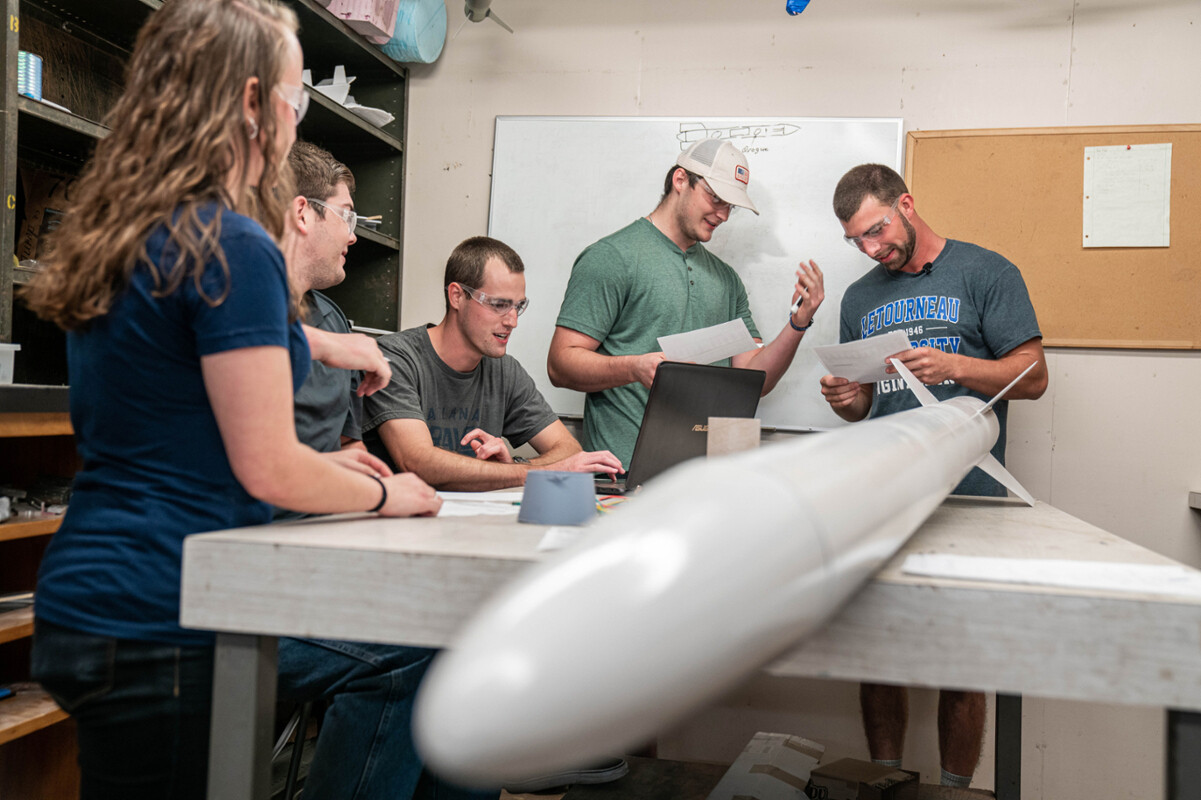
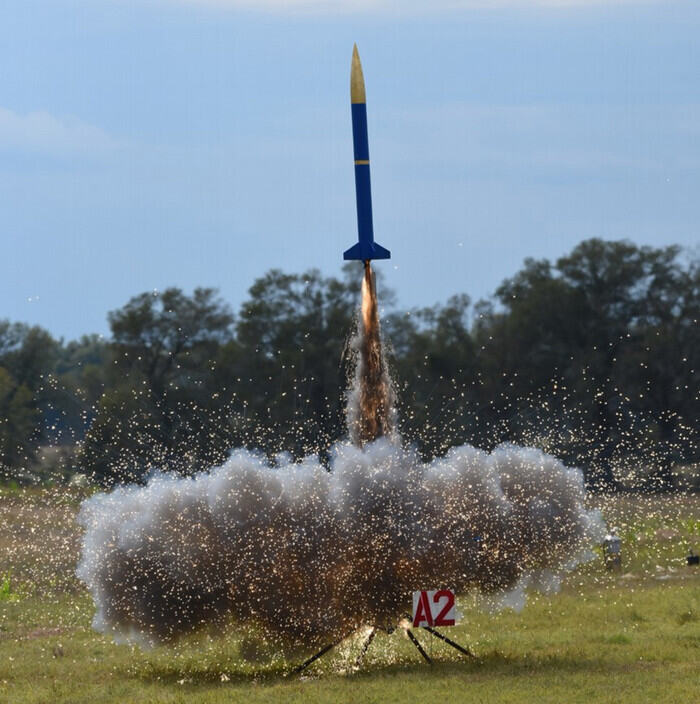
This Senior Design team will join thousands of students from across the country to compete in a student rocket competition where each team needs to design, build, and test their own high-powered rocket.
FENNEC (2023-Present) Center of Gravity Estimation Using Neural Networks for Rotary-Wing Aircraft
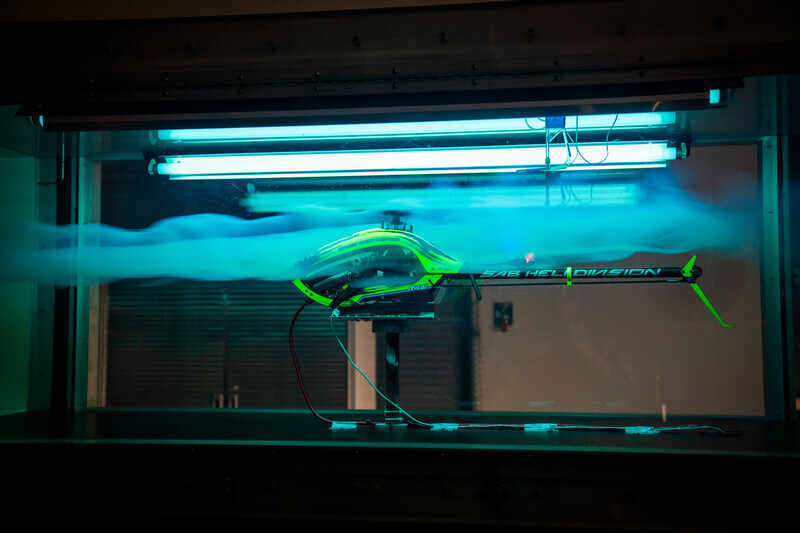
This Senior Design team will investigate the ability of machine learning methods to identify the center of gravity for a rotary-winged aircraft (helicopter UAS) using flight test data from commercially available controllers. Additional areas of research include evaluating the use of Neural Networks to distinguish between multiple operators and real-time fault detection.
Additional Student Projects
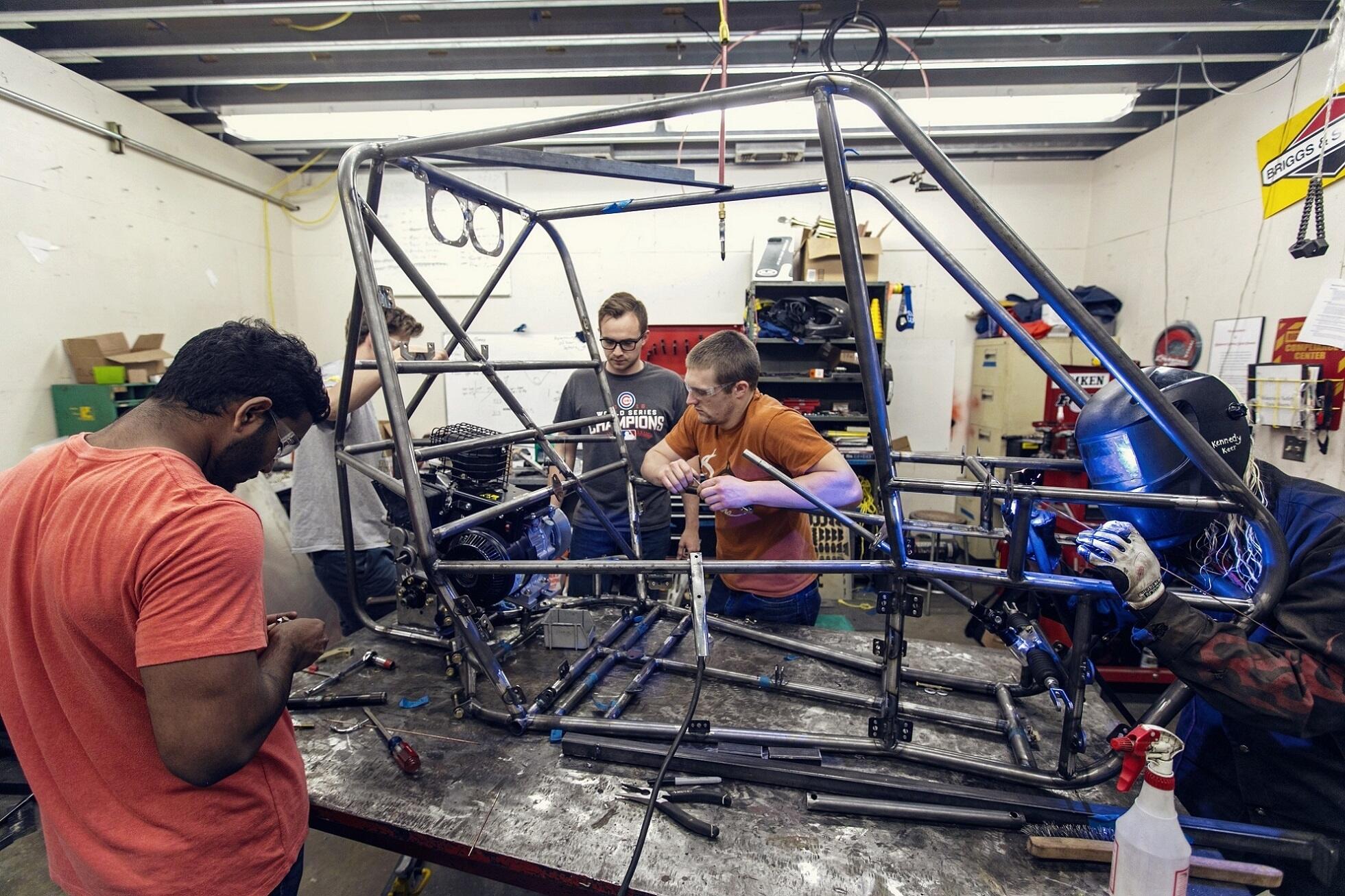
Many students enjoy working on non-capstone projects through clubs, directed study, and junior design to have creative outlets and gain experience. A couple of favorites are the SAE Mini Baja Project, where students design, build, and race an off-road vehicle in the annual Baja SAE Competition, and LetSpace, a student-led rocketry team that designs, builds, and launches high-power amateur rockets with the long-term goal of a space-shot rocket.
How Do I Prepare?
The program is designed to be completed in a four year period by students who have already completed the following list of courses. However, if you haven't taken all of these courses by the time you graduate high school, you may make up the necessary courses during your freshman year at LETU.
- Four years of high school English
- Two years of algebra
- One year of geometry
- One semester of trigonometry
- One year of science (chemistry or physics)
Both physics and chemistry are desired. Students who transfer from another college or university should understand that there are sequences of courses in the curriculum, up to six semesters in length, which build on one another.
LEARN MORE ABOUT MECHANICAL ENGINEERING AT LETU
- View program details in our current catalog
- See our most recent suggested course sequence
- Or the optional BSME degree with a focus on Biomechanics
- Questions can be directed to the Mechanical Engineering Department Chair: AndrewDavis@letu.edu