


Distinctives of Chemistry and Physics
Not sure what to do with your talents, but you like the sciences?
We may have the answer!
Chemistry may be just what you want!
Chemistry is the study of the interaction of matter and energy. But at LeTourneau
chemistry is more than the study of science, for we believe that God is the ultimate creator and
sustainer of the Universe. The study of truth in any field, including chemistry, is compatible with
seeking a deeper knowledge of God as the source of all truth.
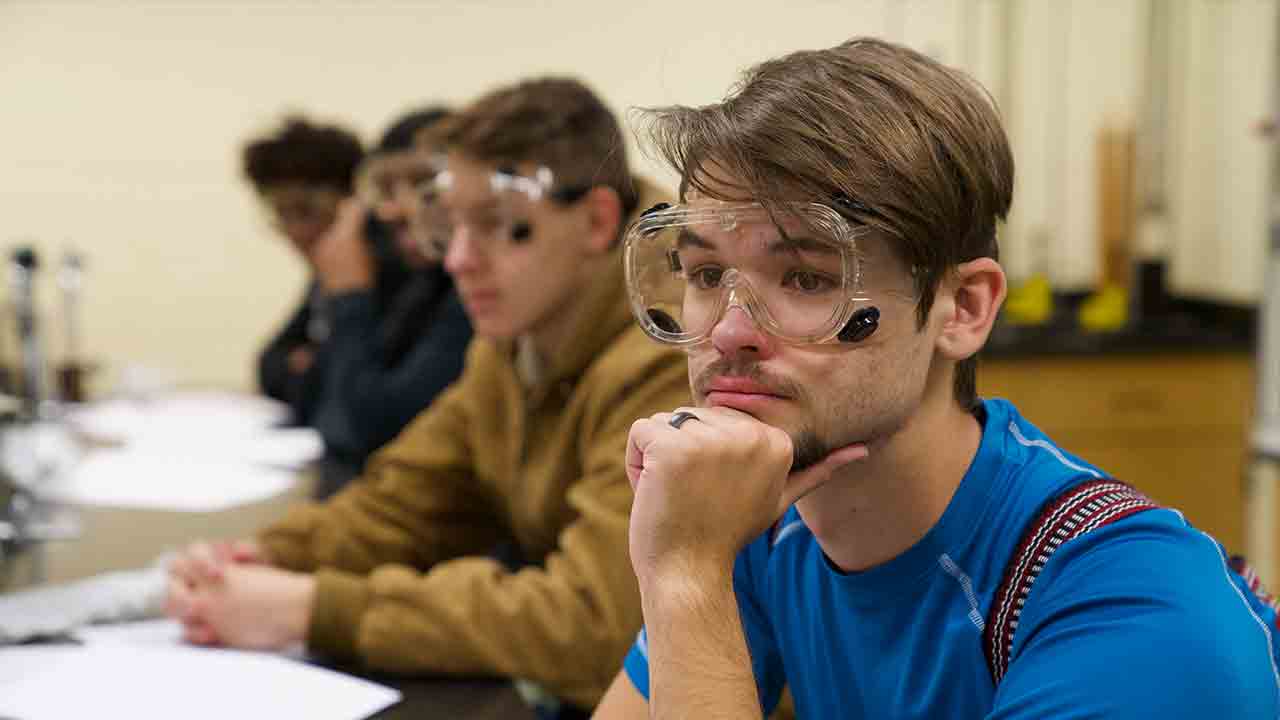
Chemistry students at LeTourneau can expect to receive a quality education in a small
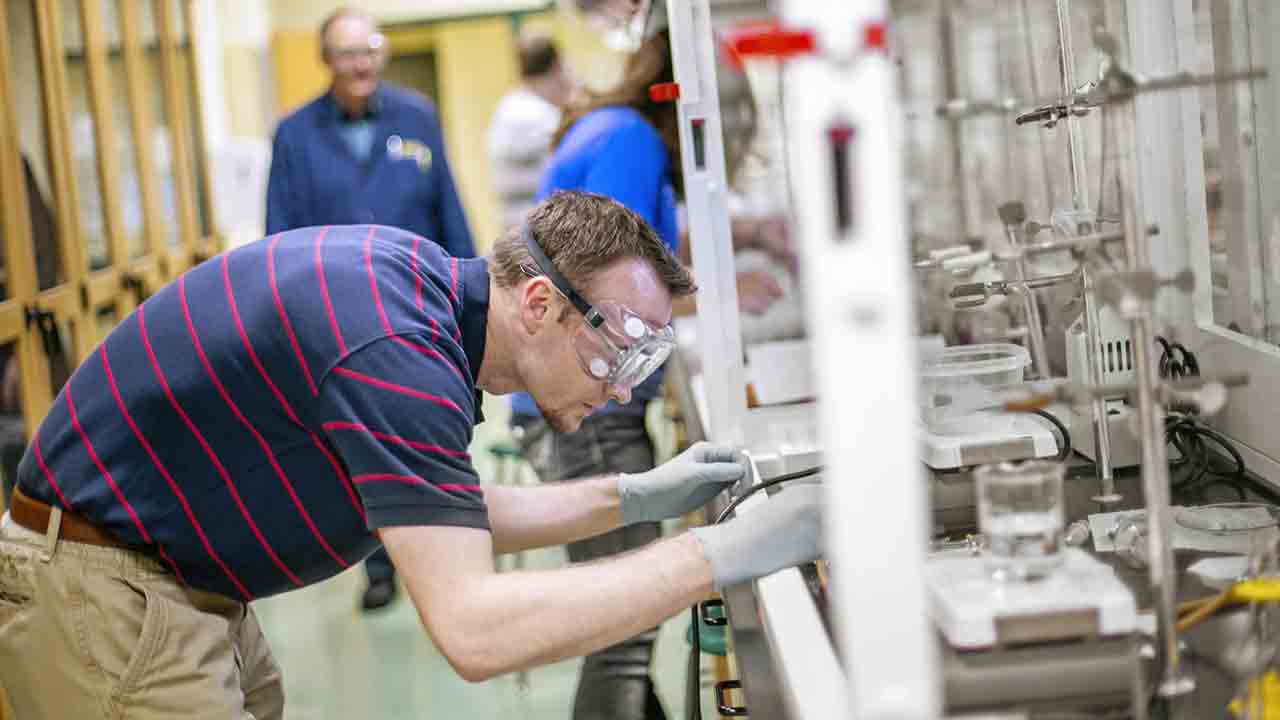
university setting where faculty-student interaction is encouraged. Coursework and equipment is
equivalent (or better for undergraduate education) to that at many larger universities. With small
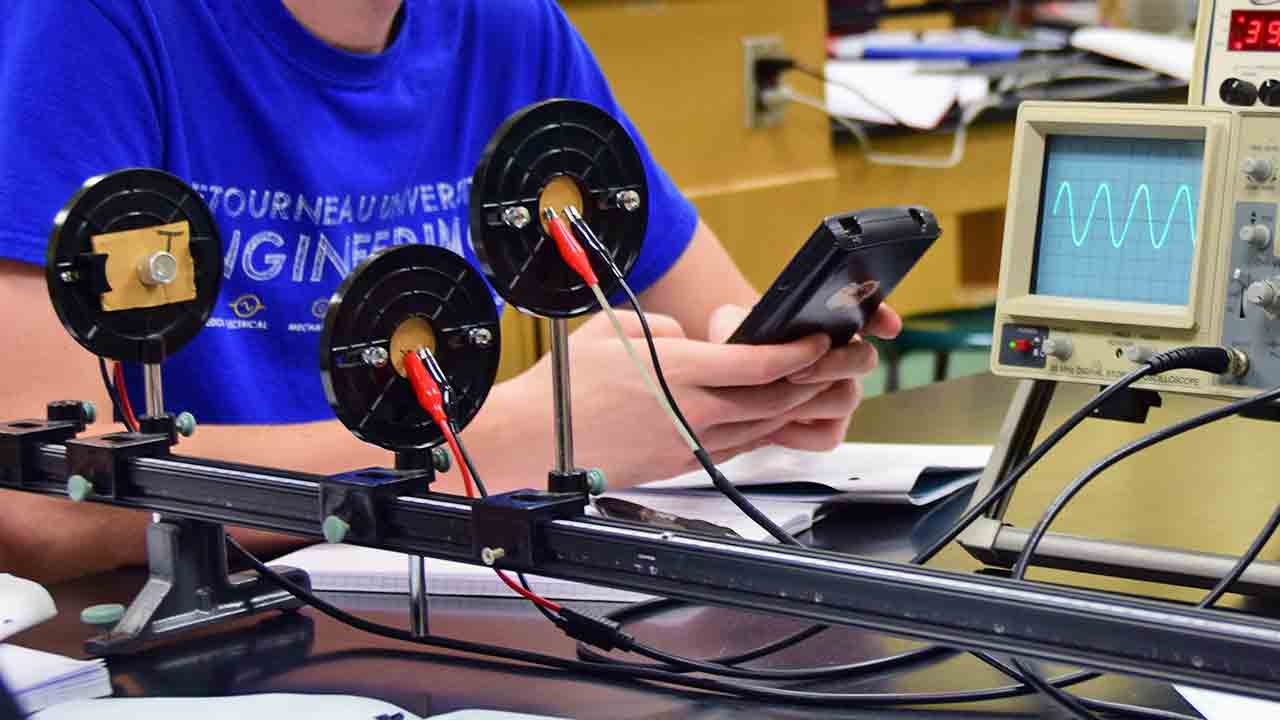
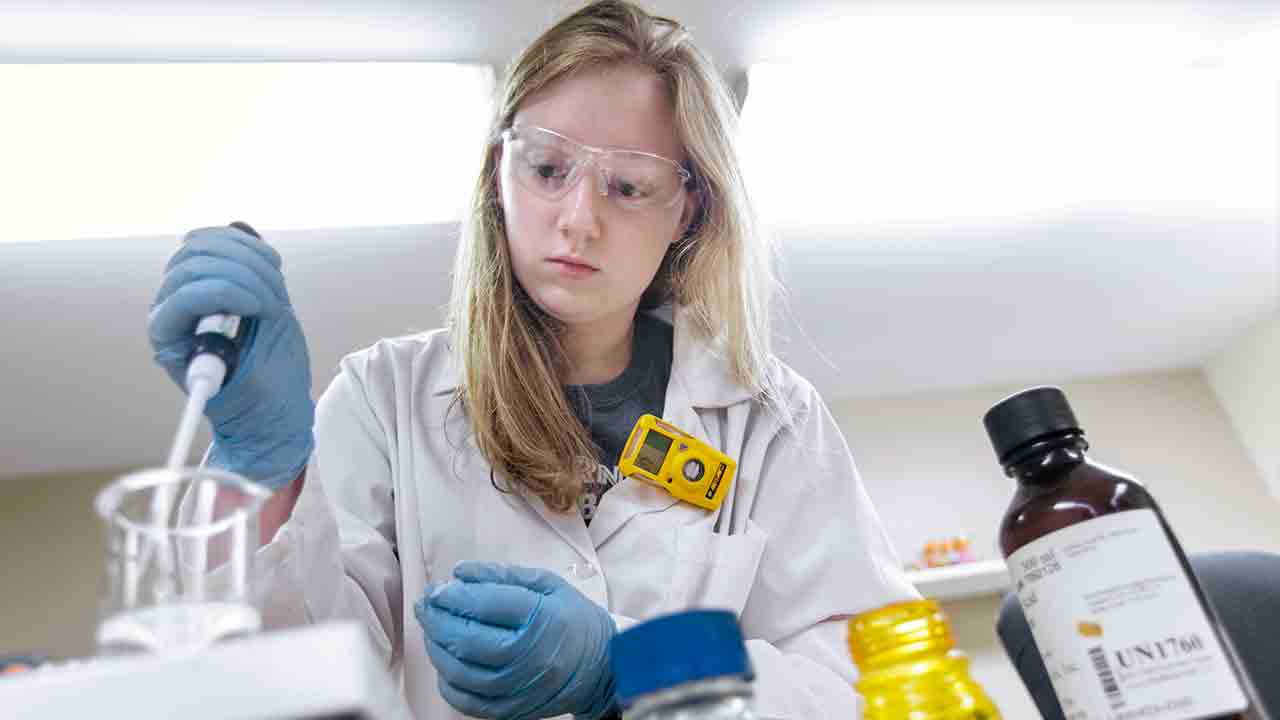
class sizes and faculty interaction, students have “hands on” opportunities to learn and work with
modern instruments.
Several modern computer interfaced instruments include:
- Atomic Absorption Spectrophotometer (AA)
- Electrochemical potentiometer,
- Fiber optic fluorescence CCD spectrophotometer,
- Fourier transform infrared spectrophotometer (FT-IR),
- Fourier transform nuclear magnetic resonance (FT-NMR),
- Gas chromatography (GC).
- Scanning electron microscope (SEM) is available through the materials joining-engineering department.
- Ultraviolet-visible spectrophotometer (UV-vis),
- PC's with chemical modeling program such as Gaussian 08, Titan, and Spartan 06 are available.
- The department has a growing linux cluster being reconfigured to run GAMESS.
Students will be involved in a research project with faculty during their junior and
senior years. This may involve practical research with the navy to study the detection of corrosion
on military aircraft or working with NASA to elucidate the chemical processes involved in the
formation of carbon nanotubes. The Welch Foundation has also funded student and faculty research as
well as contribute funds towards the procurement of new instruments.
LeTourneau has a long tradition of excellence, not only in the sciences, but
also in engineering and technology. These programs have provided excellent support to
chemistry and physics with strong mathematics and computer science departments as well as
constructive interaction and dialogue between science and technology.
Some opportunities for LeTourneau graduates include teaching at the secondary
level, work in a related industrial field, graduate school in a science concentration, and
medical school. There is high demand for science teachers in secondary education and we have
recently iniitiated a new physical science concentration in secondary education that has a
thorough curriculum in chemistry and physics. Our graduates have obtained jobs in research,
sales, and product development. LeTourneau graduates have also been accepted and done well as
graduate students at schools such as Rice, Texas A&M, Iowa State, The University of Washington,
UC Irvine, The University of Oregon, and many others. Our chemistry graduates
have recently been accepted to medical schools in Texas and Wisconsin, as well as many other
states in previous years.
Arts and Sciences